


Every model was right. The bill was still wrong.
Health systems are building AI portfolios like a maze: one defensible decision at a time, with nobody checking whether the pieces agree. Here's what that costs, and the two-week exercise that surfaces it.

AI Cyberattacks on Hospitals Are a CFO Problem, Not an IT Problem
The AHA said this week that hospitals cannot afford to defend themselves against attackers using AI. Two AI companies immediately offered to help pay for it. Meanwhile a phishing campaign is wearing MyChart's name, and a new executive order exposed how little hospitals know about their own equipment. Here is what all of it does to your cash.
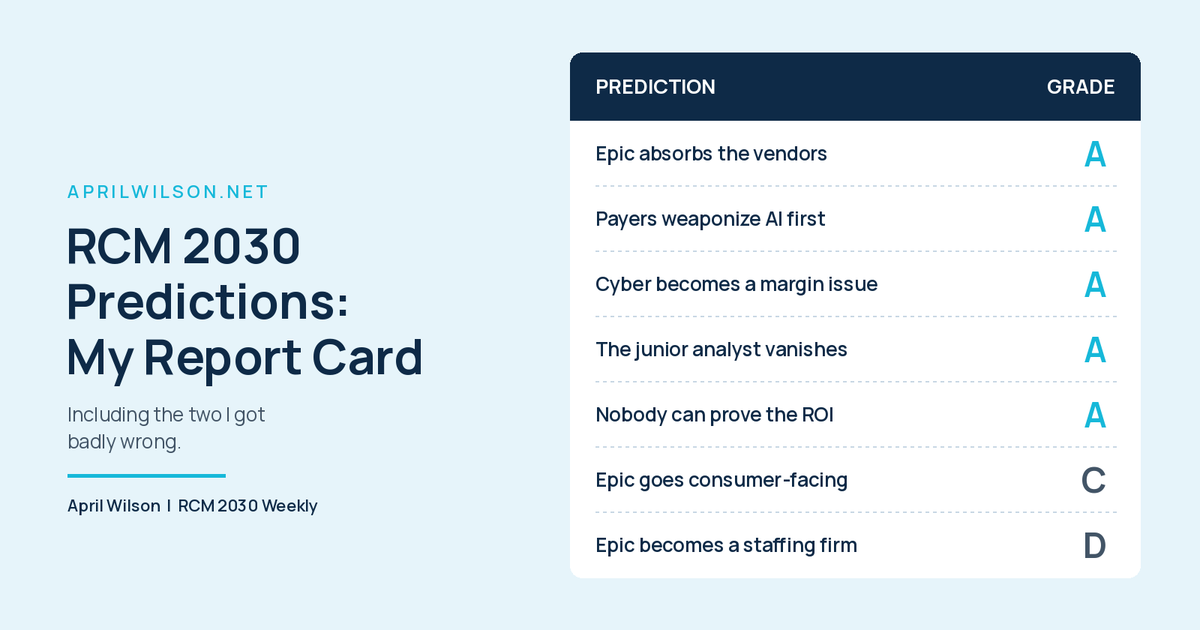
RCM 2030 Predictions: My Own Report Card, Including the Ones I Blew
I made a pile of predictions about revenue cycle in 2030. Here's an honest scorecard against 2026 reality, including the two I got badly wrong.
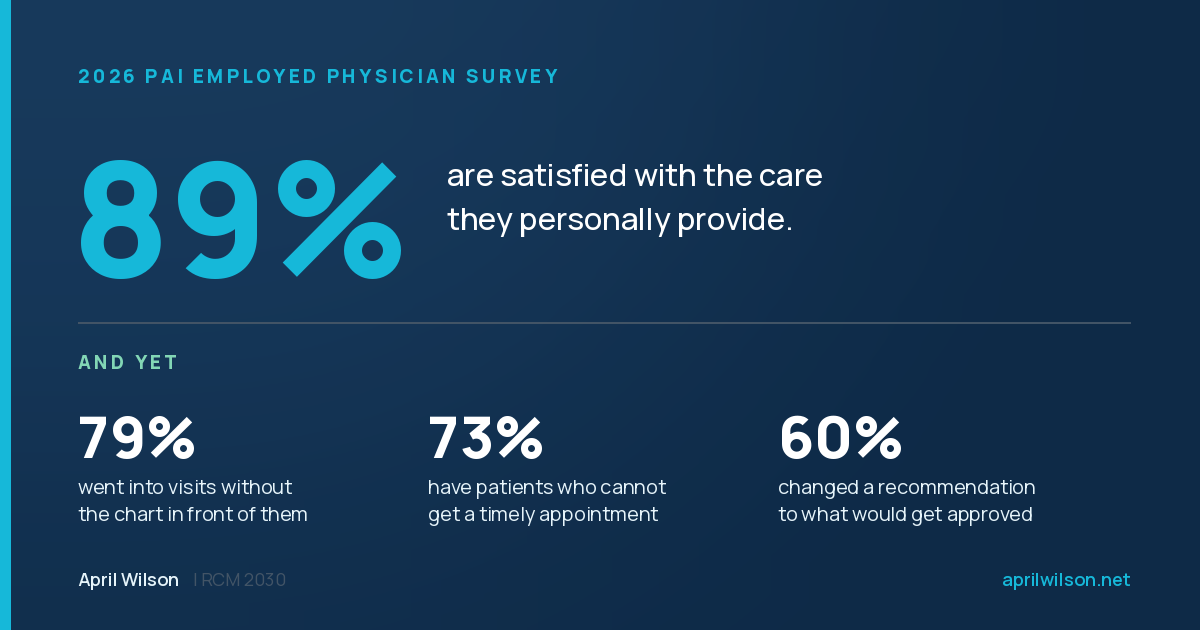
The Real Story Wasn’t Physician Burnout
Almost every headline about the new physician survey led with burnout. I read the whole thing twice, and burnout is not what these doctors are telling us. They are telling us they cannot give their patients the care they know how to give.
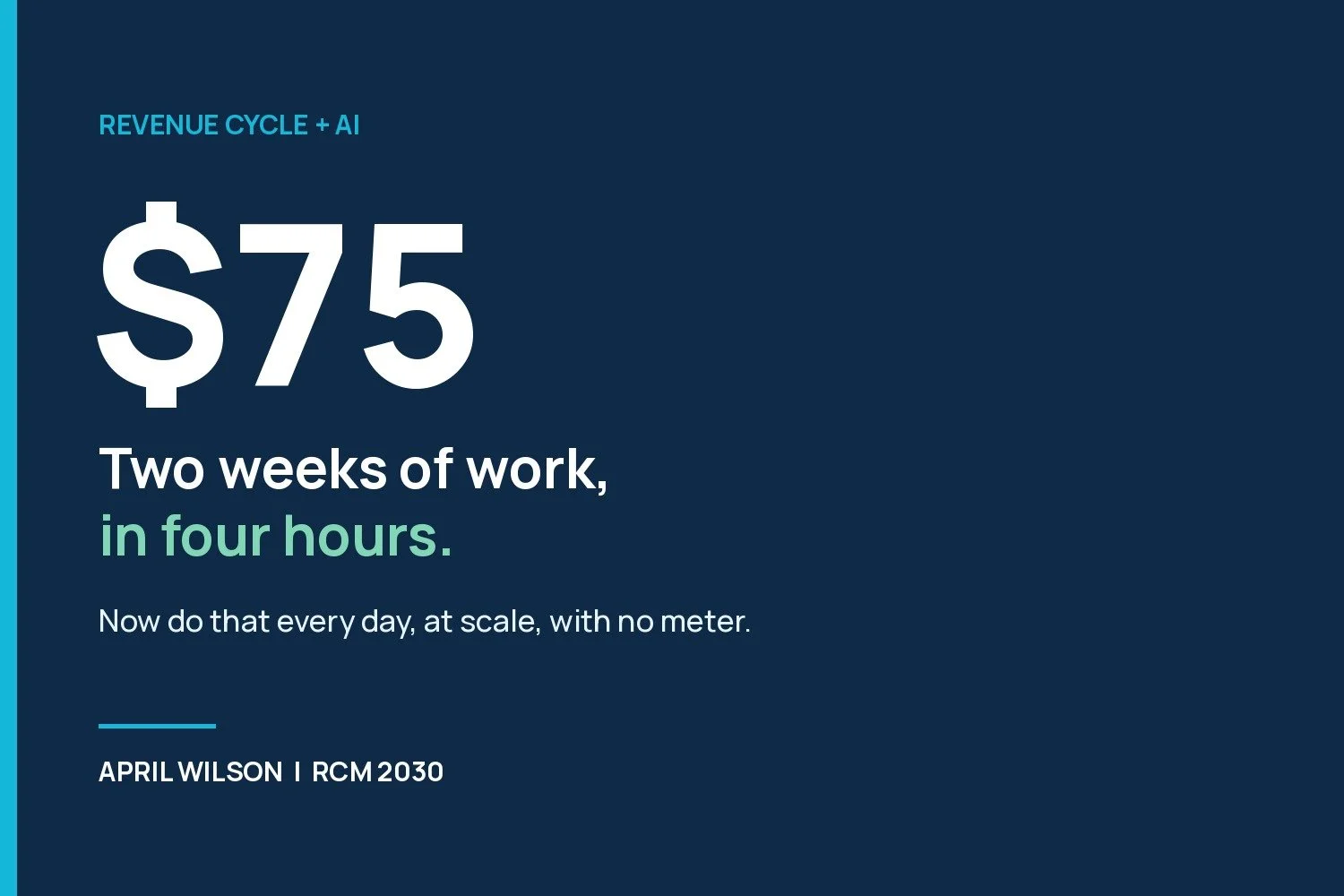
Two weeks of work in four hours, for seventy-five dollars
A Jefferson Health employee turned two weeks of work into four hours for $75 in AI tokens. Great trade, once. The trouble is that nobody has solved forecasting token spend, only 18% of the health systems scaling AI hardest can measure what it's returning, and most of that consumption isn't landing in revenue cycle expense at all. Which means your cost to collect is understated and you don't know by how much.
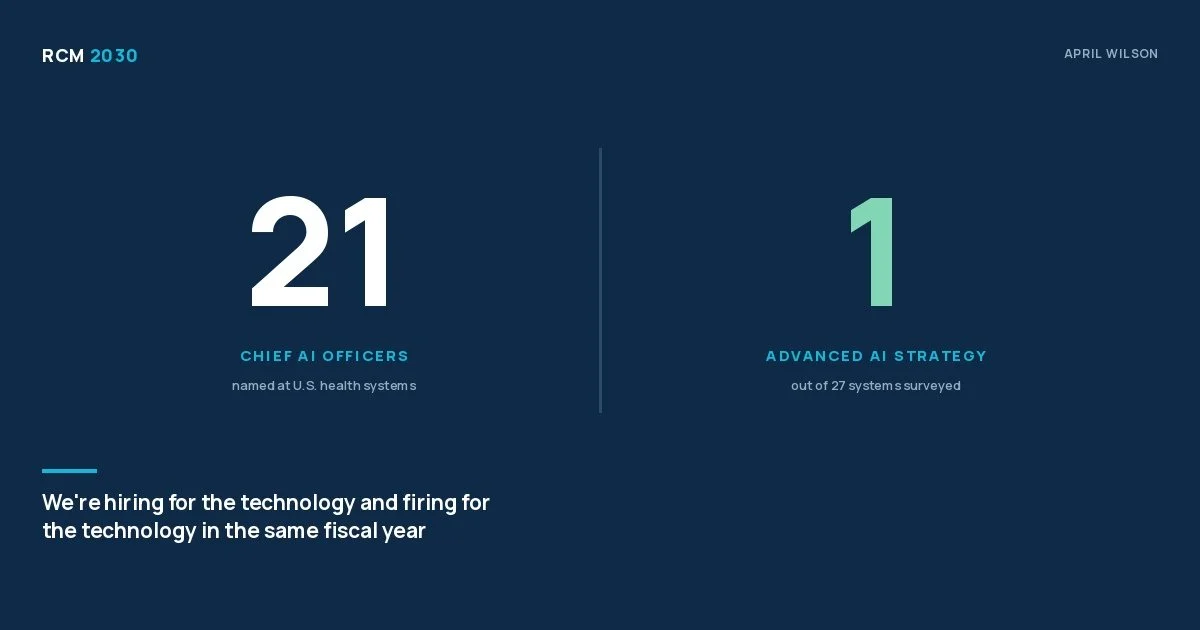
We're hiring for the technology and firing for the technology in the same fiscal year
Twenty-one health systems have named a chief AI officer. The healthcare jobs with the highest share of remote postings are coding specialist, utilization review nurse, care navigator, and Epic clinical analyst. Those are the same four jobs on every automation slide in America. We are building the 2030 org chart from the top down and the bottom out, and nobody is paying for the part in the middle.
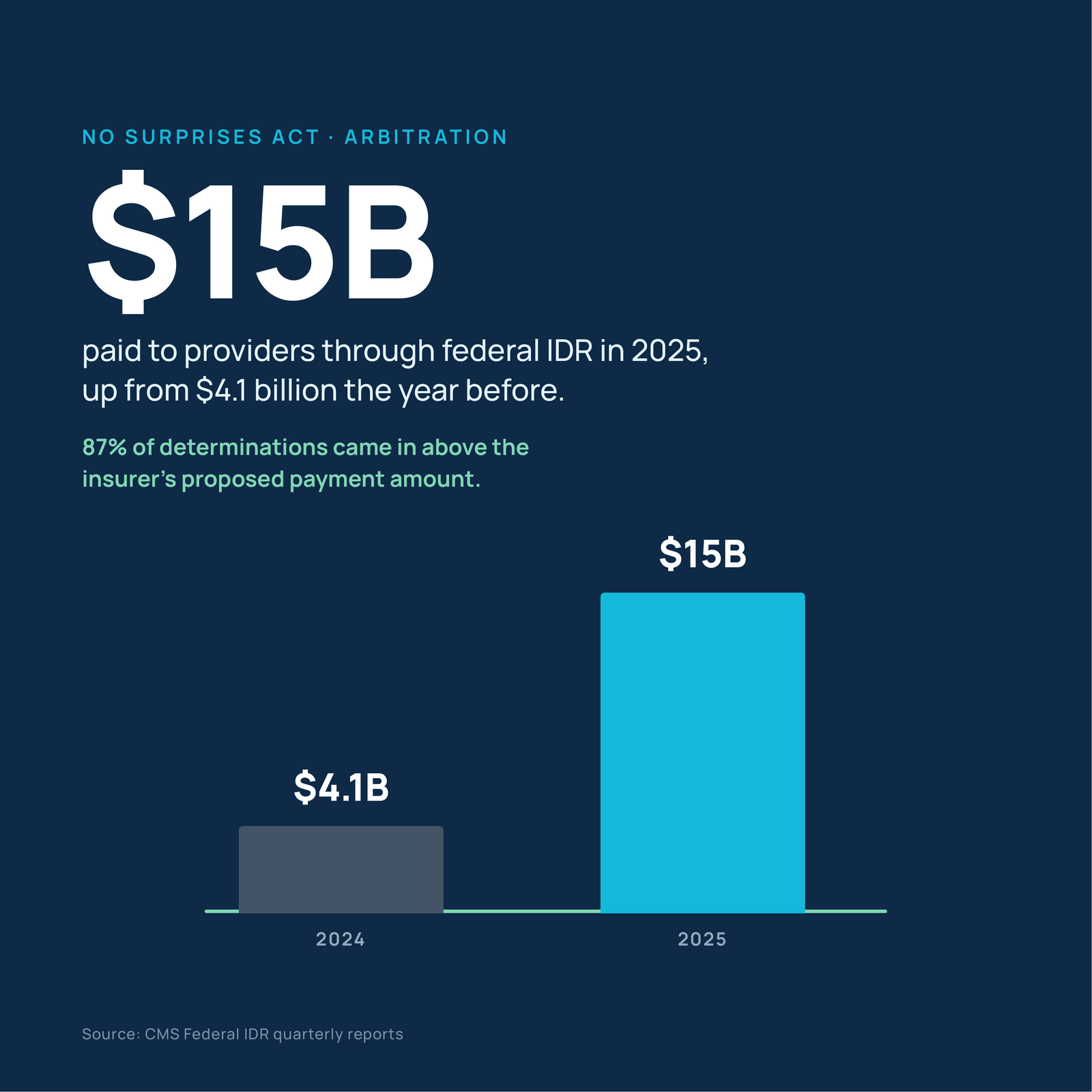
No Surprises Act Arbitration Paid Providers $15 Billion Last Year. I Wouldn't Build a Budget on It.
Providers pulled roughly $15 billion out of No Surprises Act arbitration last year, up from $4.1 billion the year before, and they're winning 87 percent of determinations. I've been chewing on that win rate all week, because a number that high in an adversarial process isn't a competitive advantage. It's a signal the process is mispriced, and mispricings in healthcare payment don't last.

Medicare Just Asked Whether AI Should Change What a Doctor's Visit Is Worth
Most of the coverage of the 2027 Medicare rule stopped at the rate cut. Further in, past the tables, Medicare stops proposing things and starts asking questions. One of them: if technology does part of the work of a primary care visit, how much should the visit be worth? Nobody has asked that in a payment rule before, and it will matter more to your revenue cycle than the rate cut will.
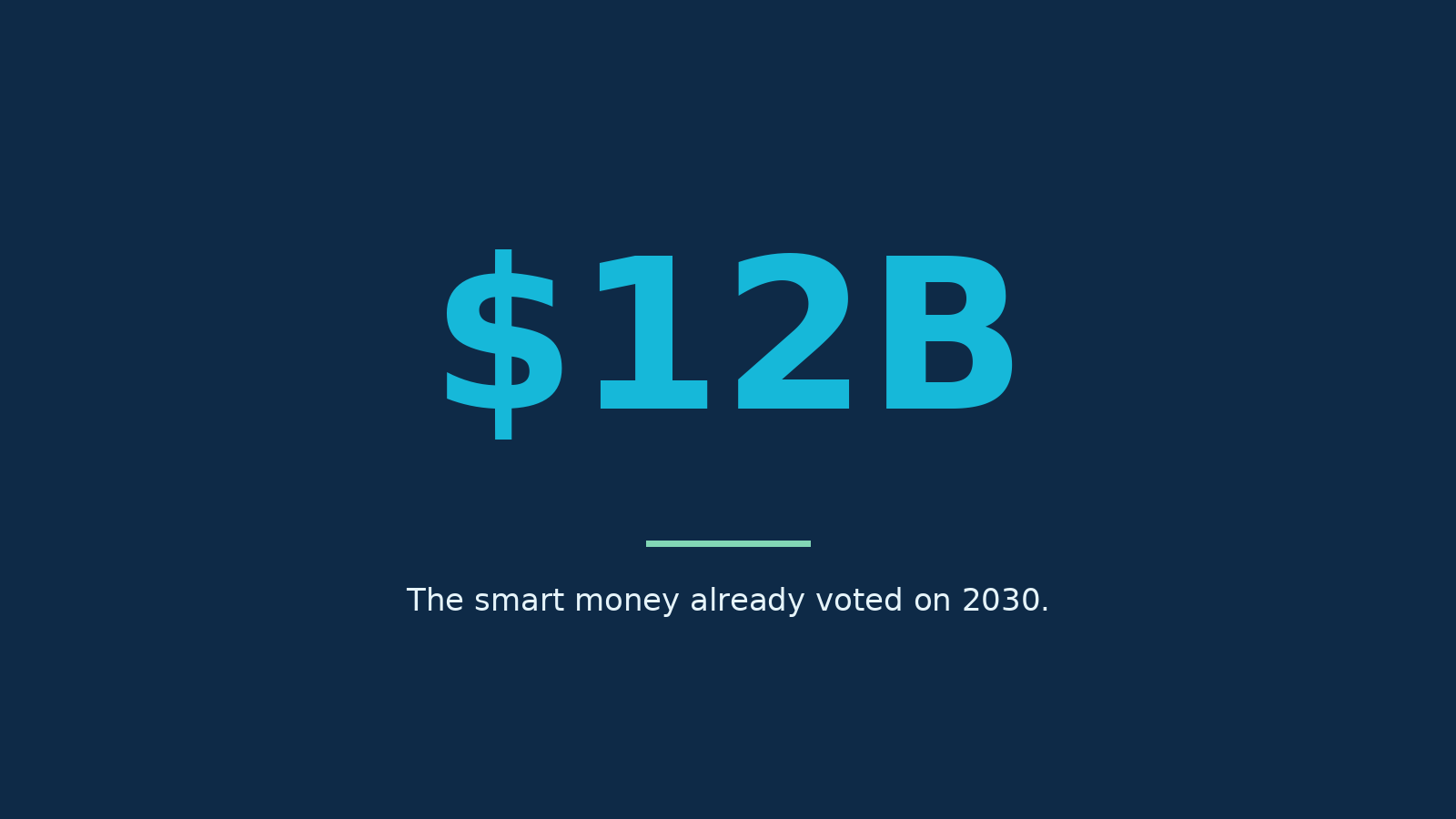
Follow the Money: The Smart Capital Already Voted on What 2030 Looks Like
While hospital strategic plans debate AI pilots, private equity signed a $12 billion revenue cycle deal, Ascension bought 300 surgery centers, and investors stopped counting AI as a differentiator. The capital already voted on what 2030 looks like.
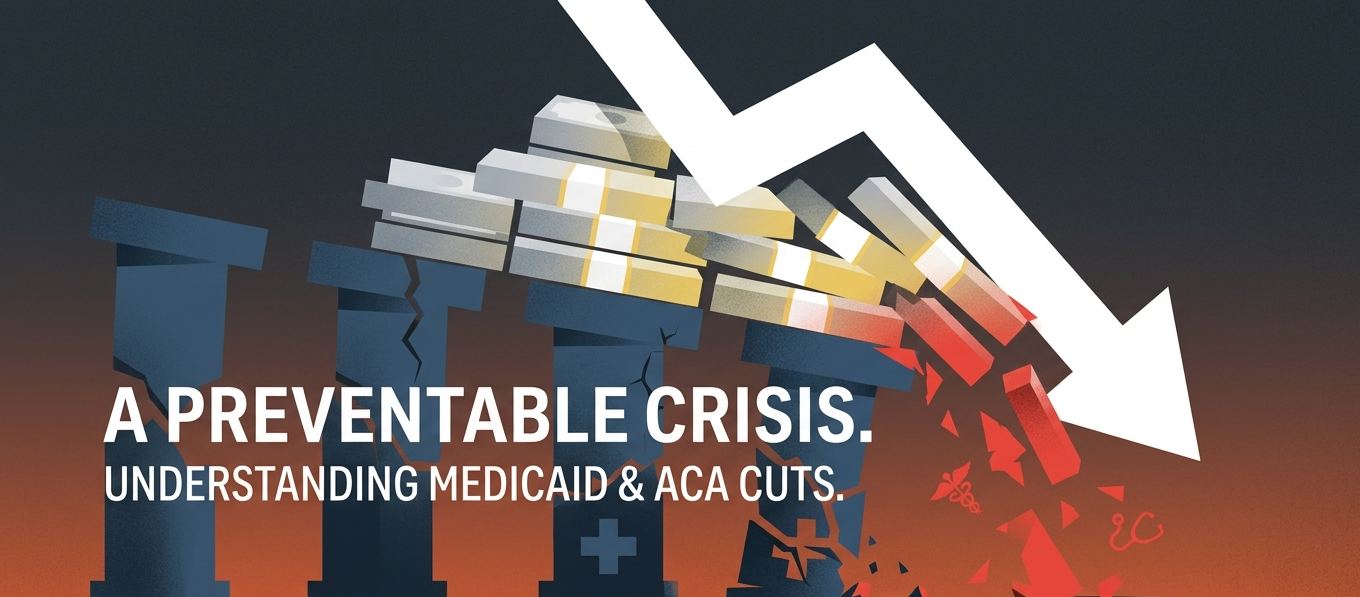
602 Hospitals Are Already Underwater. Here's What CFOs Need to Do Before the Next Wave Hits.
Six hundred and two hospitals are already running a combined $10 billion deficit, and that's before a single federal cut has landed. I read the full report, the appendices too, so you don't have to. Here's what's advocacy framing versus hard CMS data, and the three things your board needs to hear before this shows up as next quarter's bad news.

Every State Is Writing Its Own AI Rulebook. Washington Hasn't Started.
34 AI healthcare laws passed in 21 states in 2025 alone. Here's what CFOs and RCM leaders actually need to do about the patchwork, before Washington ever weighs in.

I Forecast the Future of Revenue Cycle Management From a Travel Company. Here's Why That Makes Me Better At It.
I forecast the future of the revenue cycle from a travel company — no hospital in sight. That's not as strange as it sounds. The reason I can see where RCM is headed has little to do with being in healthcare and everything to do with no longer being buried alive in it. A piece about altitude, thinking time, and the industry that quietly steals both from the leaders who need them most.
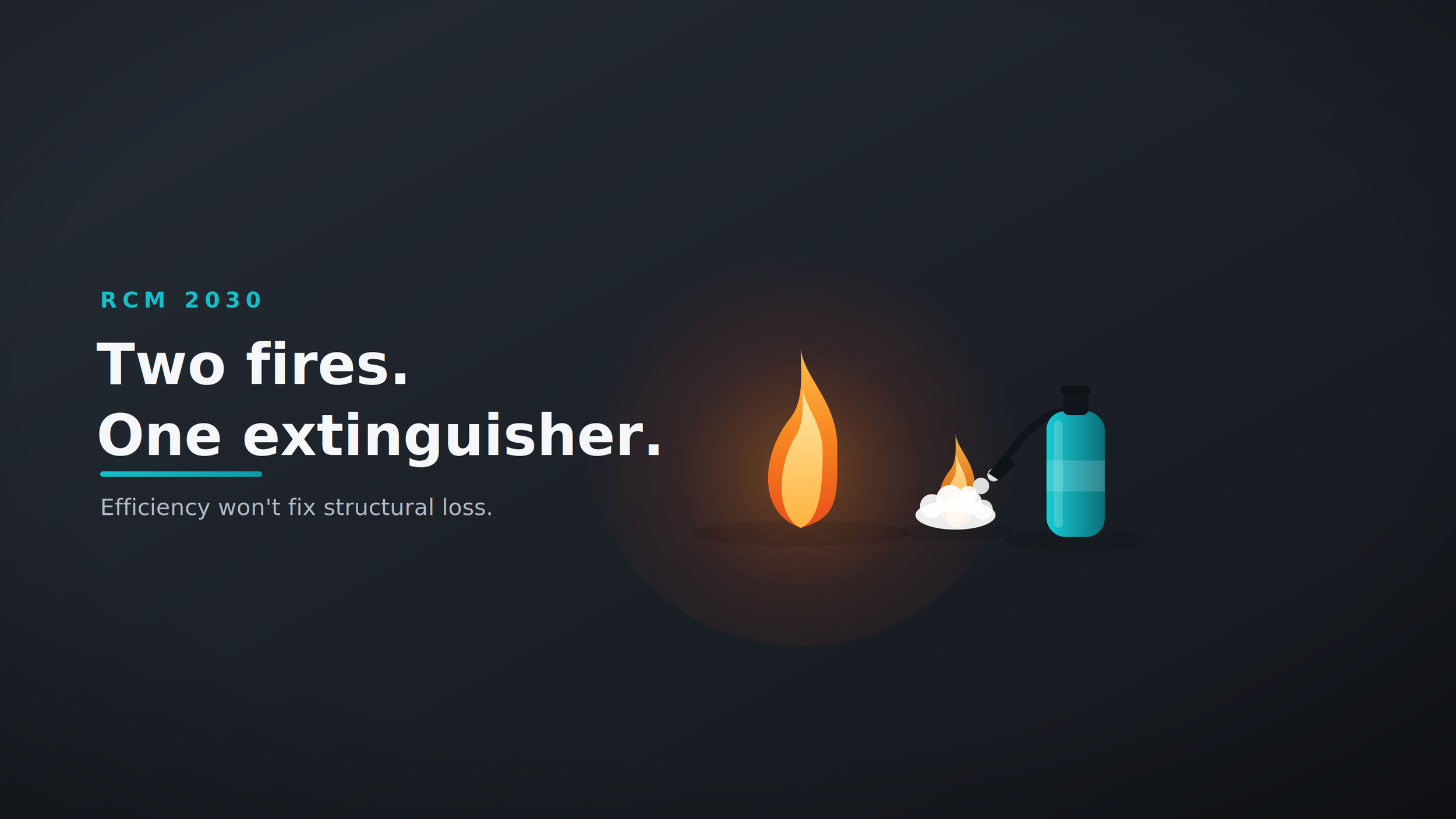
Why Revenue Cycle Efficiency Won't Save Hospitals From Structural Revenue Loss
Every hospital is fighting the same fire right now: denials, rework, coding, labor cost. Good. But there's a second fire in the building, and almost nobody is pointing a hose at it. Operational efficiency and structural revenue loss are two different problems, and you can't automate your way out of the second one.
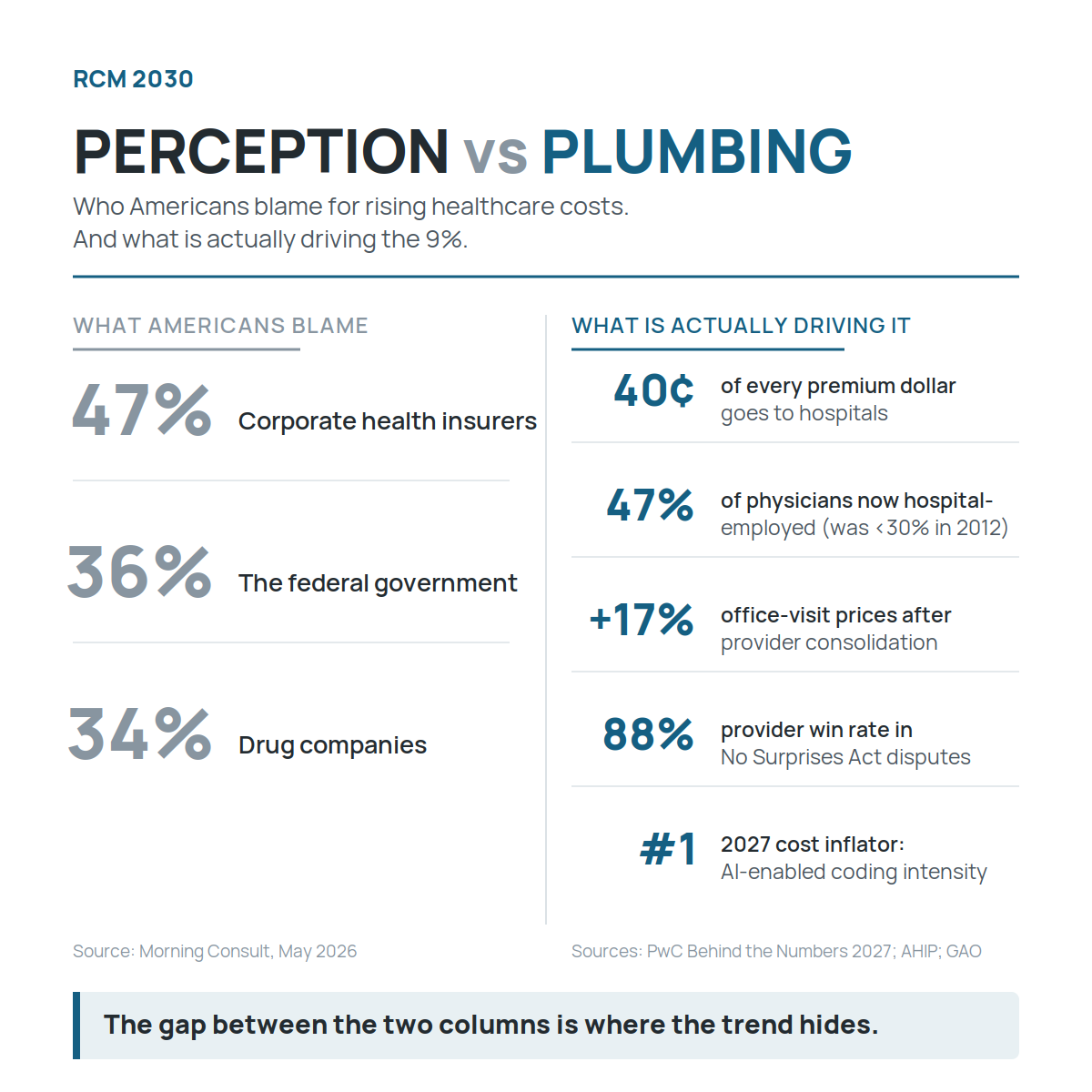
The Enemy Is Us. And AI Won't Be the Hero.
We keep looking for someone to blame for rising healthcare costs, and we keep hoping AI will rescue us. After most of a career in the revenue cycle, I think both instincts are getting in the way of the work that actually moves the number. Here is why.
AI and the Revenue Cycle Workforce: What This Week's Healthcare News Means for Staffing in 2030
Will AI replace revenue cycle jobs; AI revenue cycle staffing 2030; RCM workforce modernization; healthcare AI layoffs revenue cycle; deskilling revenue cycle; new RCM roles AI

Why Does AI Keep Creating More Work for My Revenue Cycle Team?
Automation doesn't shrink your revenue cycle team; it changes what they have to be good at. Here is why AI is creating more work, not less, and what hospital CFOs should do about it before 2030.
The Problem Isn't That Hospitals Are Moving Too Slow. It's That They Think Slow Is Fine.
Three flavors of AI laziness are quietly stalling hospital revenue cycles right now: the pilot that never ends, the checkbox deployment, and the assumption that your vendor handles it. This week proved the runway is shorter than most leaders think. Here is the honest 2030 forecast and the one thing worth doing before your next leadership meeting.
The AI Lawsuits Are Here. What Should RCM Leaders Do Before the Next One Names Their Hospital?
Pennsylvania just sued an AI chatbot for impersonating a licensed physician. UnitedHealthcare faces a class action over an algorithm plaintiffs say has a 90% error rate and was used to override physician judgment without human review. Both cases are being treated as consumer tech and payer problems. They are not. Every legal theory being established in these lawsuits applies directly to how hospitals use AI in prior authorization, denial routing, and charity care screening right now. Here is what CFOs and RCM leaders need to do before the next lawsuit names a provider.
Will RCM Vendors Survive the AI Revolution? What Waystar's Big Quarter Actually Tells Us About the Future of the Vendor Landscape
Waystar posted 22% revenue growth in Q1 and said out loud what most vendors only say in board decks: they are building toward automating a meaningful portion of the $100 billion in annual RCM labor pool. That is excellent marketing. It is also a market thesis about your headcount, your vendor contracts, and what the revenue cycle looks like in 2028 — and most CFOs and PE firms are not asking the right questions about what it means yet.

When Your AI Agent Goes Slowly Crazy: What Revenue Cycle Leaders Need to Know Right Now
Rush University Medical Center is 18 months into its agentic AI journey. What they learned should be required reading for every CFO and revenue cycle director in the country. The problem with agentic AI isn't that it breaks. It's that it drifts, slowly, quietly, in directions nobody notices until the damage is already in your A/R. Here's what that means for your revenue cycle and what to do about it.