

Hospital at Home Is Now Funded Through 2030. Here’s What It Means for Revenue Cycle Leaders.
Congress has extended Medicare’s Hospital at Home waivers through 2030, signaling that acute inpatient care is no longer tied to a building. For revenue cycle leaders, this shift has major implications for billing accuracy, automation, quality reporting, and financial operations that must now function beyond hospital walls. This analysis breaks down what Hospital at Home means for RCM readiness through 2030.

The Cerner Breach Shows Why Cybersecurity Belongs in the Revenue Cycle Plan
The Cerner breach is not just a cybersecurity failure. It is a revenue cycle warning. Legacy systems, delayed disclosure, and vendor dependency expose hospitals to cash flow disruption, billing disputes, and operational paralysis. This analysis explains why cybersecurity must be embedded into revenue cycle planning as a core continuity strategy heading toward 2030.
What MedPAC’s 2027 Update Recommendation Signals for RCM Leaders
MedPAC’s 2027 draft recommendations may look routine on the surface, but they send a clear signal to revenue cycle leaders planning for 2030. With Medicare margins still deeply negative and safety-net funding becoming more targeted, hospitals will not be able to rely on broad payment increases. This analysis explains what the update means for cost discipline, automation, safety-net exposure, and long-term RCM readiness.

Hospitals Cannot Afford to Lose a CFO Without a Plan
Hospital CFO turnover is accelerating, and the risk is no longer theoretical. As the CFO role expands to include revenue cycle oversight, cybersecurity, automation, and policy risk, leadership gaps now threaten margin stability. This analysis breaks down why CFO succession planning has become a financial imperative and what boards and CEOs must do now to protect continuity through 2030.
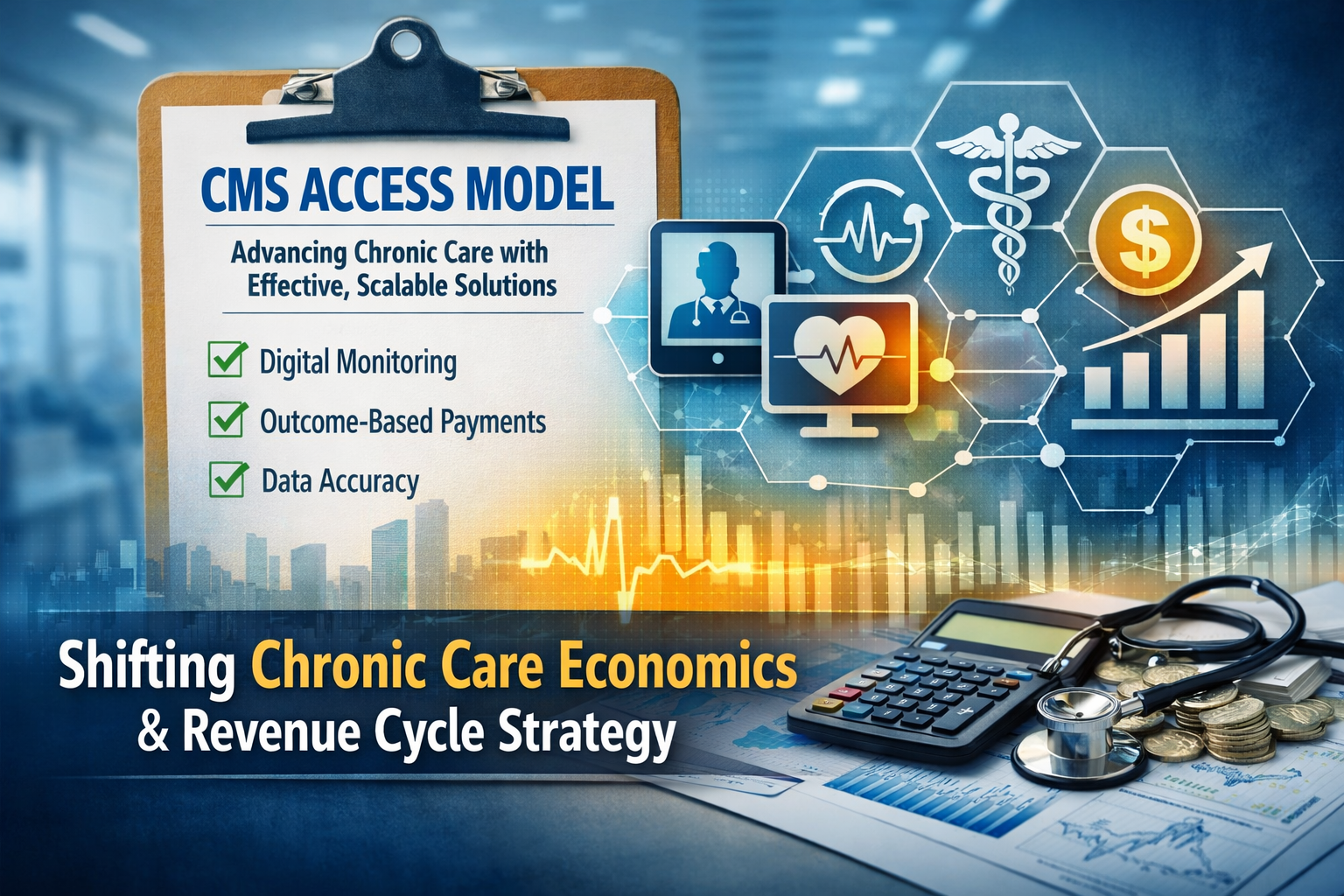
Why CMS’s New ACCESS Model Signals a Shift in Chronic Care Economics (Copy)
CMS’s new ACCESS Model is not just a chronic-care pilot. It signals a structural shift toward outcome-based, digitally managed reimbursement. For revenue cycle leaders, ACCESS previews how recurring payments, documentation standards, and data quality expectations will reshape chronic-care economics by 2030.

What CFOs Need to Know About the 2026 340B Rebate Model and the AHA Lawsuit
The proposed 2026 340B rebate model would replace upfront drug discounts with delayed reimbursement, shifting liquidity and compliance risk directly onto hospitals. For CFOs, this is not just a policy dispute but a fundamental change in cash flow, margin protection, and enterprise risk management—especially for safety-net providers.