

 Image 1 of 1
Between July 16 and July 24, four separate things happened to hospital revenue. Medicare proposed paying doctors less. CMS proposed shrinking a Medicaid funding arrangement most hospitals depend on. The federal government held back a billion dollars from two states. And new tariffs landed on drugs and medical supplies.
Each one got its own headline. Each one was scored by a different office, on a different timeline. Nobody scored them against each other.
Your income statement will.
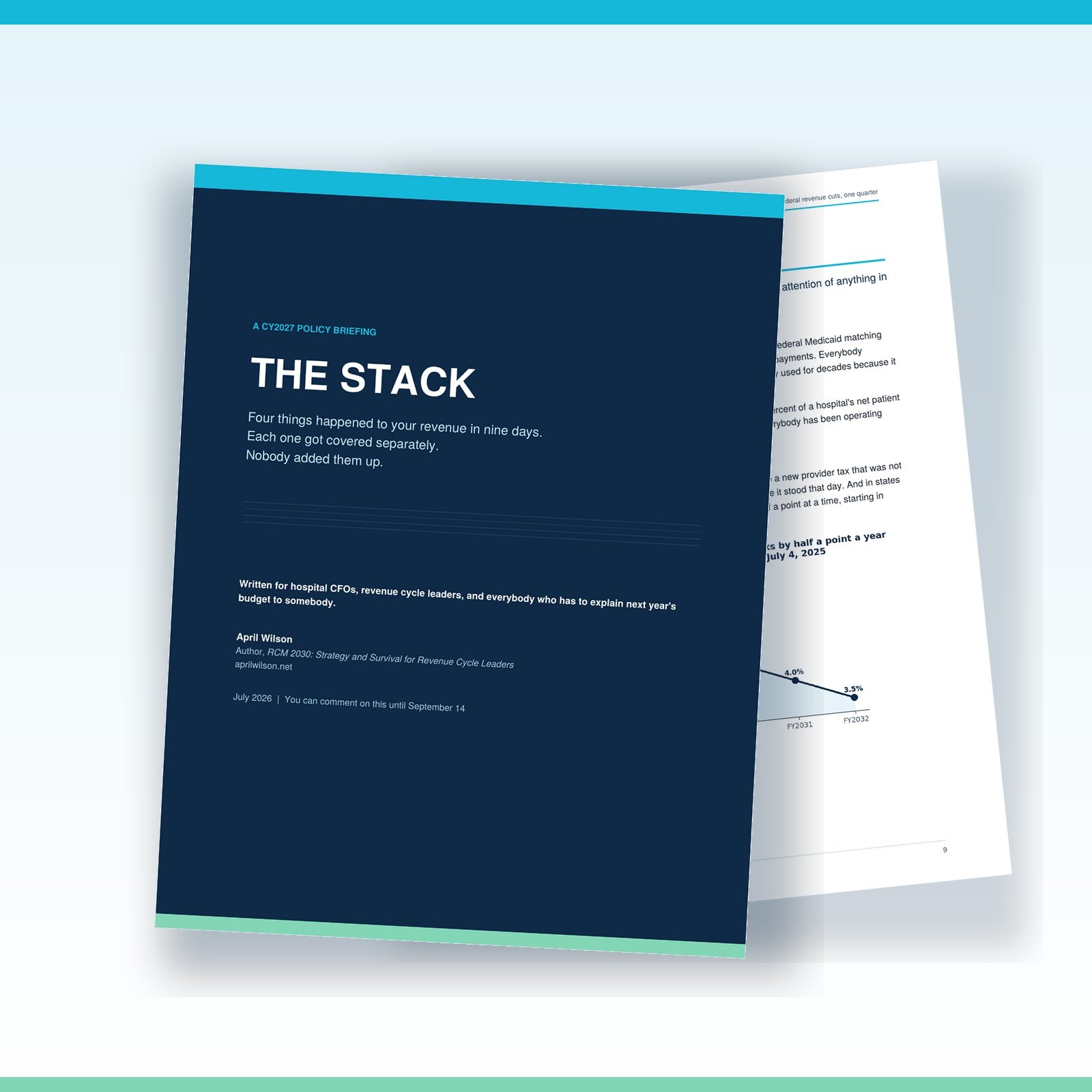
The Stack puts all four on one timeline and tells you what each one does to your money and your staffing. It runs 20 pages with seven original charts built from the government's own published numbers, including a specialty-by-specialty breakdown of who wins and who loses under the 2027 physician payment proposal.
Inside:
A one-page summary you can hand to a board
Every dated milestone from October 2026 through 2032 on a single timeline
Which 18 specialties gain and which lose, pulled straight from the proposed rule
What the Medicaid provider tax change actually is, and the $246 billion behind it
Why one health system's admissions went up while its revenue went down
Six things worth doing before the comment window closes
A section on what this guide does not cover, because you should know where the edges are
Written by April Wilson, who spent thirteen years in healthcare revenue cycle working with everything from small rural hospitals to large health systems. Author of RCM 2030: Strategy and Survival for Revenue Cycle Leaders.
Free. Delivered as a PDF, formatted for 8.5 x 11 so it prints clean.
The federal comment period closes September 14, 2026.
Between July 16 and July 24, four separate things happened to hospital revenue. Medicare proposed paying doctors less. CMS proposed shrinking a Medicaid funding arrangement most hospitals depend on. The federal government held back a billion dollars from two states. And new tariffs landed on drugs and medical supplies.
Each one got its own headline. Each one was scored by a different office, on a different timeline. Nobody scored them against each other.
Your income statement will.
The Stack puts all four on one timeline and tells you what each one does to your money and your staffing. It runs 20 pages with seven original charts built from the government's own published numbers, including a specialty-by-specialty breakdown of who wins and who loses under the 2027 physician payment proposal.
Inside:
A one-page summary you can hand to a board
Every dated milestone from October 2026 through 2032 on a single timeline
Which 18 specialties gain and which lose, pulled straight from the proposed rule
What the Medicaid provider tax change actually is, and the $246 billion behind it
Why one health system's admissions went up while its revenue went down
Six things worth doing before the comment window closes
A section on what this guide does not cover, because you should know where the edges are
Written by April Wilson, who spent thirteen years in healthcare revenue cycle working with everything from small rural hospitals to large health systems. Author of RCM 2030: Strategy and Survival for Revenue Cycle Leaders.
Free. Delivered as a PDF, formatted for 8.5 x 11 so it prints clean.
The federal comment period closes September 14, 2026.